
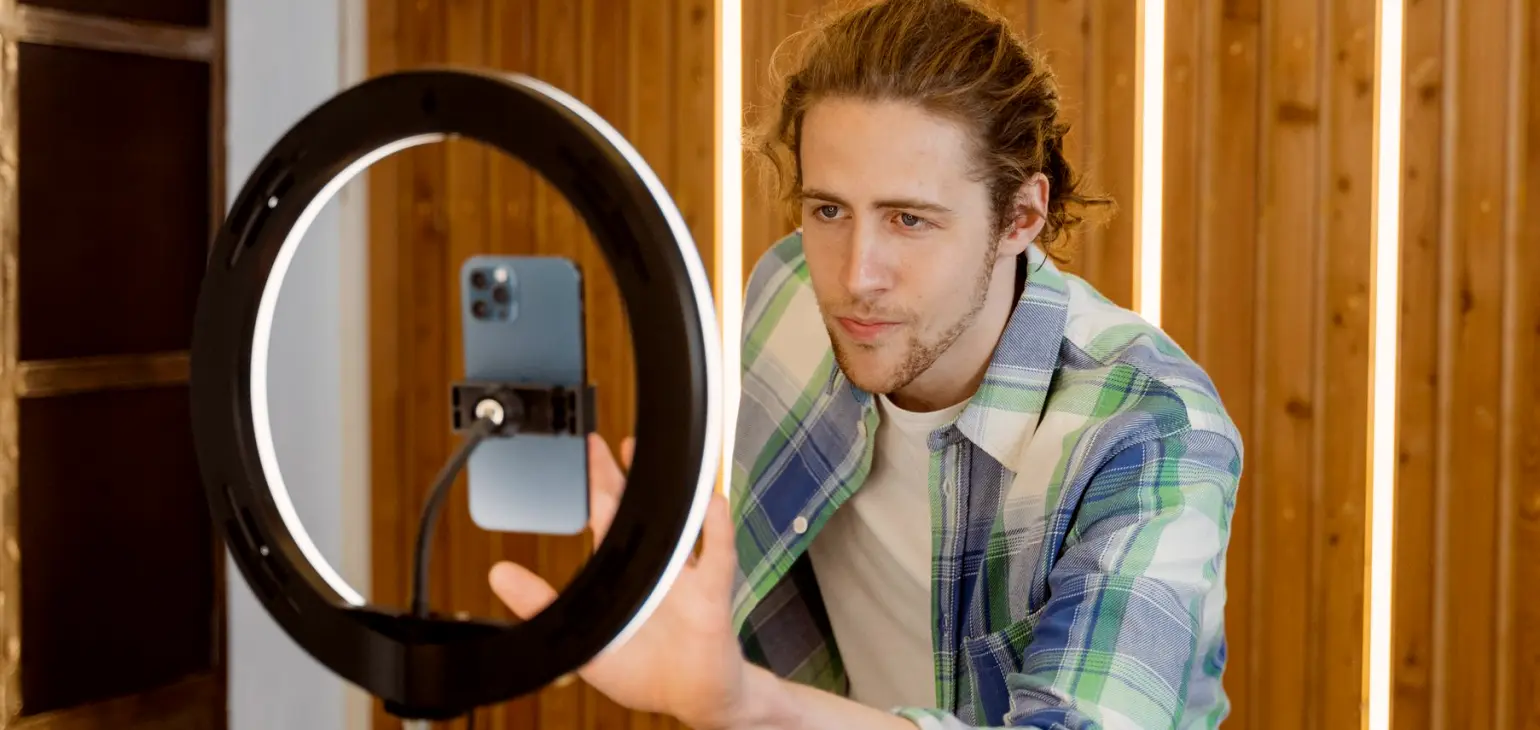
The first video Marcus sent me
Marcus came to us with a problem he described in one sentence: his videos looked like he was reading a hostage statement. He manages a small logistics team and records a weekly update for colleagues across several sites. The content was fine. The delivery made people drift.
When I watched his first clip during our opening session, the cause was easy to see. His eyes kept dropping to a second monitor on his desk where the notes sat, then flicking back up to the lens in short, nervous bursts. Each flick read as discomfort, and viewers picked it up even if they could not name it.
I will tell his story the way he told it to me, with his permission and his first name only. What helped him was not talent or a new microphone. It was a handful of small, repeatable decisions about where to look, how to sit and how much of him the frame should show.
Finding the lens, not the screen
The first change was the simplest to describe and the hardest to do. Marcus had been looking at his own face on the preview window, which is a natural habit and a quiet trap. Looking at yourself puts your gaze slightly below the lens, and the result is a person who seems to be glancing down at something.
We moved the preview window to the top of his screen, right beneath the camera, and shrank it. Then we practised speaking a single sentence while keeping his eyes on the lens, pausing, and letting them leave on purpose before returning. A deliberate look away reads as thinking. A restless one reads as worry.
He found it odd for about ten minutes. By the end of the session he had stopped glancing at the preview altogether, and his sentences began to land with a steadier rhythm because his attention was no longer split in two.
- Keep the preview small and close to the lens
- Look away only at the end of a thought
- Return to the lens before the next sentence begins
Posture that settles the shoulders
The second thing we looked at was how Marcus sat. He leaned toward the desk with his shoulders raised, as if bracing for a question. On camera that lean shortens the neck and makes the head appear to push forward, which adds tension the viewer feels without noticing.
We raised his chair a little, brought the camera to eye level and asked him to sit back until his spine touched the chair. Nothing dramatic. He let his hands rest on the desk instead of gripping a pen, and he exhaled before pressing record.
What surprised him was how much this changed his voice. With the shoulders down, his breathing slowed, and the clipped, rushed sentences he had been recording began to stretch into something closer to the way he talks across a table. Posture, it turns out, is part of pacing.
Framing the shot so he looks engaged
Marcus had placed the camera low and slightly to one side, so the viewer looked up at him with a lot of ceiling behind his head. We adjusted three things: height, distance and the amount of space above him.
The camera went to eye level, directly in front of him. We left a modest gap above his head, roughly the width of two fingers held at arm's length from the screen, and cropped in so his shoulders and upper chest filled the lower edge. That framing feels conversational. Pull back too far and the speaker looks distant; push in too close and every small movement feels magnified.
He also noticed that a plain wall to one side and a single plant gave the picture some depth without competing with him. None of this required new equipment, only a little time moving things around and checking a short test clip.
- Camera at eye level, directly ahead
- A little headroom, shoulders at the lower edge
- A simple, uncluttered background
Practising the habit between sessions
Good habits fade if they only live in a coaching room, so I gave Marcus a short routine to repeat before each weekly recording. It took about five minutes and needed nothing but his usual setup.
First he checked the camera height and the position of the preview window. Then he recorded a thirty-second test, watched it with the sound off, and looked only at his eyes and shoulders. Watching silently is a useful trick: without the words, the body language is all you see. If his gaze wandered or his shoulders crept up, he reset and recorded once more.
After two weeks he told me the routine had become automatic. We reviewed his recordings together, and I sent him written notes and a short practice sheet afterwards, as we do for every learner, so he had something concrete to return to.
- Check height and preview position
- Record a thirty-second test
- Watch it muted, judging only eyes and posture
What changed in his updates
By the third week, Marcus's colleagues had started commenting on the videos, which had never happened before. Nobody said he looked polished. They said he sounded like himself, and that the updates felt shorter even though they were not.
That is the outcome I would encourage anyone to expect, and it is a modest one. Good eyeline will not turn a nervous speaker into a broadcaster in a single afternoon. It removes distractions so the message can be heard.
If you record business video and recognise Marcus's early clips in your own, begin with the lens, the chair and the frame. Those three adjustments cost nothing and tend to show results within one or two recordings.
Marcus did not need a new voice or a different personality. He needed to know where to look, how to sit and what the frame should show, and then to repeat it until it felt ordinary. Many presenters are in the same position. Small, steady adjustments to eyeline and posture, practised in short sessions and reviewed with honest feedback, are often enough to make a recorded update feel relaxed and direct.