
Why we start on paper
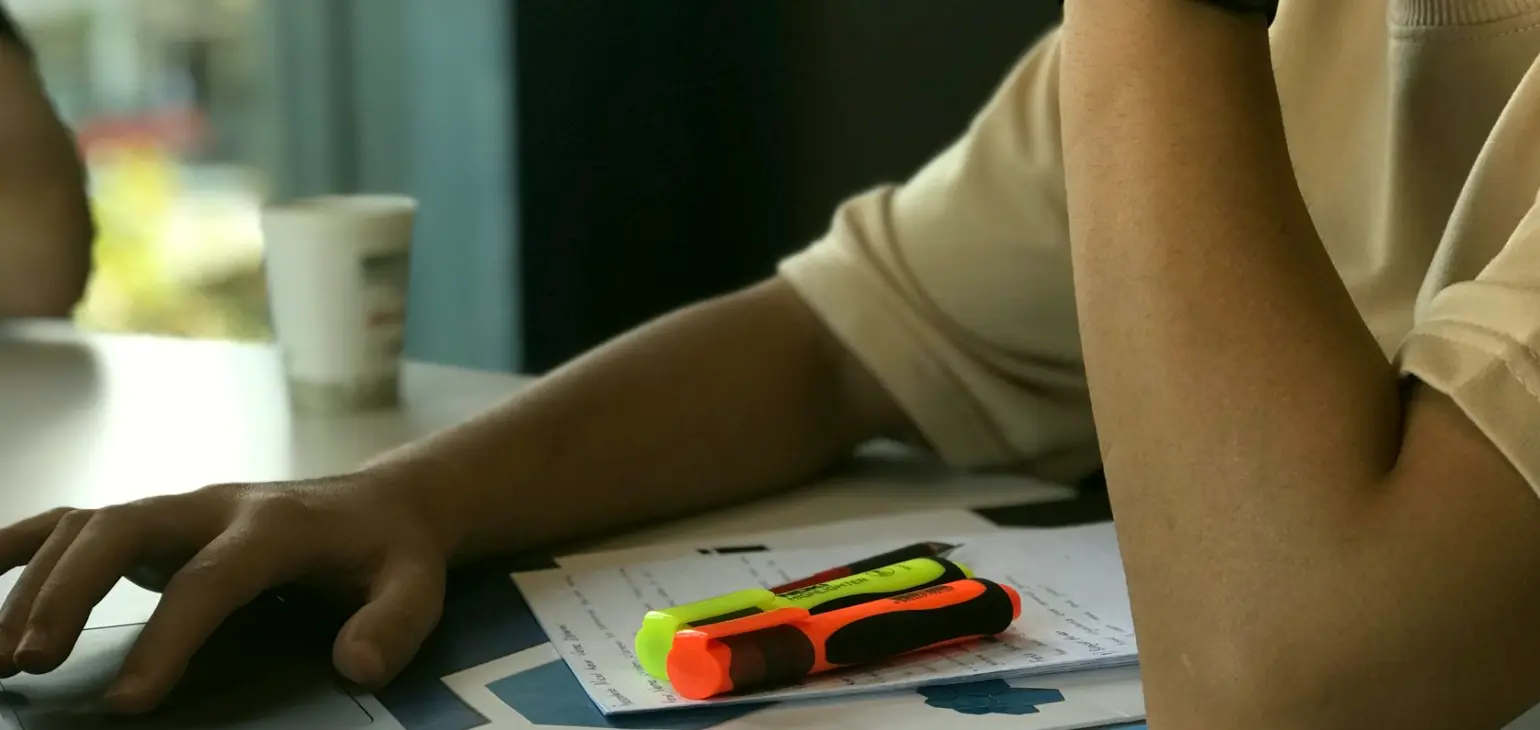
Before anyone sits in front of a camera, I ask them to print their script and bring a pen. It feels old-fashioned, but paper shows things a screen hides. You can see the shape of a paragraph, where the long sentences cluster, and where you would run out of breath if you read it exactly as written.
In individual sessions on Script Delivery and Pacing, the printed page is our main working tool. We read it aloud once with no marks at all, and I listen for where the voice goes flat. Those spots are almost never a problem with the speaker. They are usually a problem with how the text was written for the eye rather than the ear.
This autumn I have been using the same routine with nearly everyone, from people recording a short product update to those preparing a full training video. The method scales because it asks for nothing more than a page, a pen and a few minutes of attention.
The four marks we use
The marking system is deliberately small. A slash means a short pause, a double slash means a longer one, an underline means a word that carries weight, and a curved arrow over a phrase means speed up slightly and keep it moving. Four marks are enough to change how a paragraph sounds, and more than that becomes clutter you stop reading.
Learners often over-mark at first, underlining half the sentence. I suggest one underline per sentence at most. If every word is important, the listener cannot tell which one you meant, and the emphasis becomes noise rather than guidance.
After marking, we read the page again and compare it with the unmarked version. Most people hear the difference immediately, and say the second reading sounds like someone explaining rather than someone reciting.
- Slash for a short pause
- Double slash for a longer breath
- Underline for the word that carries the point
- Curved arrow for a phrase to move through lightly
Cutting sentences down to breathing length
The next tool is a pair of scissors, figuratively speaking. Written sentences tend to be longer than spoken ones, and a sentence you cannot say in one comfortable breath will make you rush its ending or gasp in the middle.
We read each sentence aloud and split it wherever the breath runs short. A comma often becomes a full stop, and a clause that began with 'which' becomes its own short line. This is not about dumbing anything down. It is about letting the listener catch each idea before the next one arrives.
I also look for stacked prepositions and nested phrases, the kind that read fine on a page but make a speaker lose the thread. Rewriting them in the margin, in your own words, is usually quicker than fighting them every take.
A timer, a pencil and a steady pace
Pace is the hardest thing to judge by feel, so we measure it. I use a plain kitchen-style timer and ask the learner to read a marked paragraph at a speed that feels slightly slower than natural. Nerves push almost everyone faster, and a pace that feels slow to the speaker usually sounds calm and clear to the viewer.
We note the time for each paragraph in pencil at the bottom of the page. Over several reads, the numbers settle, and the speaker develops a sense of what steady actually feels like. That internal reference is worth more than any rule about words per minute.
When a learner moves on to teleprompter work with Daniel, the pencilled timings travel with them. They give a starting speed to set and a way to notice when the scroll and the voice have drifted apart.
Reading it back with a recording
The last method is a recording made on whatever phone is nearby. We do not judge the picture here. We only listen. Playing back thirty seconds of your own voice, with the marked page in front of you, shows whether the pauses landed where you planned and whether the underlined words were actually stressed.
Many people are surprised that a pause they felt as long was barely audible. Others find they paused in the same unmarked place every time, out of habit. Both discoveries are useful and both are easy to correct with a small change to the markings.
After each session, I send the learner a short feedback note and the practice sheet we used, so the same routine can be repeated at home. The marked page is theirs to keep, and I encourage them to mark a fresh script the same way before each recording.
- Listen first, watch later
- Check each underlined word was truly stressed
- Note any pause you take out of habit
Keeping the toolkit small
A common question is whether special software would do this better. My honest answer is that the tools matter less than the habit. A page, a pen, a timer and a recording cover everything we need for pacing, pauses and emphasis, and they travel easily to any room where you record.
What matters is that the markings are yours. A script marked by someone else carries their rhythm, not yours, and it tends to sound borrowed. Marking your own page forces you to decide what you actually mean, sentence by sentence.
If you would like to try this before booking anything, take a paragraph you will need to record soon, mark it with the four symbols, and read it aloud twice. The difference between those two readings is the whole method in miniature.
The tools we rely on for script delivery are modest on purpose: paper, a pen, four simple marks, a timer and a short recording. Each one makes the invisible parts of speech visible, so you can adjust them calmly. Practise with one paragraph this week, keep the marked page, and bring it to your next session so we can build on what you already hear in your own voice.