
Why the first thirty seconds deserve a checklist
Most people who record business videos spend hours on the middle of the script and a few minutes on the opening. That is understandable, because the middle holds the substance. Yet viewers and live stream audiences decide quickly whether to stay, and the opening is also where your own nerves are loudest. A short checklist lets you make the important choices calmly, at your desk, instead of discovering them mid-sentence with the camera running.
This guide is the first of several on introductions and openings. It deals with the decisions you make before you commit to a version, not with how to deliver it once chosen. Think of it as a set of questions to answer in writing. If you can answer all of them in a sentence or two, your opening is probably ready. If two or three leave you hesitating, that is where your next rehearsal should go.
Work through the list once with your current script open beside you. Mark any line where the answer is unclear, and leave those marks visible. They show you exactly what to fix, which is far more useful than a vague feeling that the start is not quite right.
Who is watching, and what do they already know
Begin with the viewer. A greeting that suits colleagues who open your training video because they must is different from one for customers who found your live stream by choice. Write down, in one line, who is likely to be watching and what they already know about you. If the audience knows you well, a long self-introduction feels like delay. If they have never seen you, a name and one phrase about your role is usually enough.
Then ask what they want from the next minute. People rarely wait around for a speaker to warm up. They want to know quickly that the video concerns their problem. Check whether your first sentence says so, or whether it only talks about the video itself. Phrases such as welcome to this session on cover the greeting but say little, so see whether you can pair the welcome with the subject in the same breath.
Finally, consider where they are watching. A short clip on a phone in a busy day calls for a tighter start than a webinar people have scheduled time for.
- Can you describe the typical viewer in one sentence
- Does your first line tell them the topic
- Is the self-introduction as short as this audience needs
Is the greeting short enough to say naturally
Read your greeting aloud once, at normal speed, and listen for any word you stumble over. Stumbles in the first line are usually a sign that the sentence was written for the eye rather than the mouth. Long openings with several clauses make you run out of breath and rush the remainder. Aim for a greeting you could say comfortably in a single breath, with a clear pause after it.
Consider also the warmth of the wording. A greeting should sound like something you would actually say to a person across a table. If you would never say it out loud in a meeting, rewrite it. Plain phrases such as good morning, I am glad you joined, or thanks for being here are fine, and they leave room for the part that matters.
Check the pause as well. Many speakers hurry from the greeting straight into the first point, which gives the viewer no moment to settle. A short, deliberate pause after your greeting tells the audience you are in no rush, and it steadies you too.
What is the one message the opening must deliver
Every opening needs a first key message, and it should be only one. Ask yourself what a viewer must understand after thirty seconds to make the rest worthwhile. This might be what the video will help them do, a problem it addresses, or a promise about how long it will take. If you find yourself listing three or four things, you are stacking the opening, and most of it will be forgotten.
Test the message by saying it without looking at your script. If you cannot state it in one sentence from memory, it is not yet clear enough for a viewer to take in on first hearing. Simplify until you can. The wording on the page can be fuller, but the core idea should be short enough to remember.
Be careful with preamble. Apologies, remarks about the weather, and comments on your own nerves feel natural while you speak, yet they spend the most valuable seconds on material the viewer did not come for. Keep the message in the first few sentences and let any personal asides come later, if at all.
- One message, stated in a single sentence
- No apology or filler before the first point
- Message can be repeated without the script
Does the setting support what you are about to say
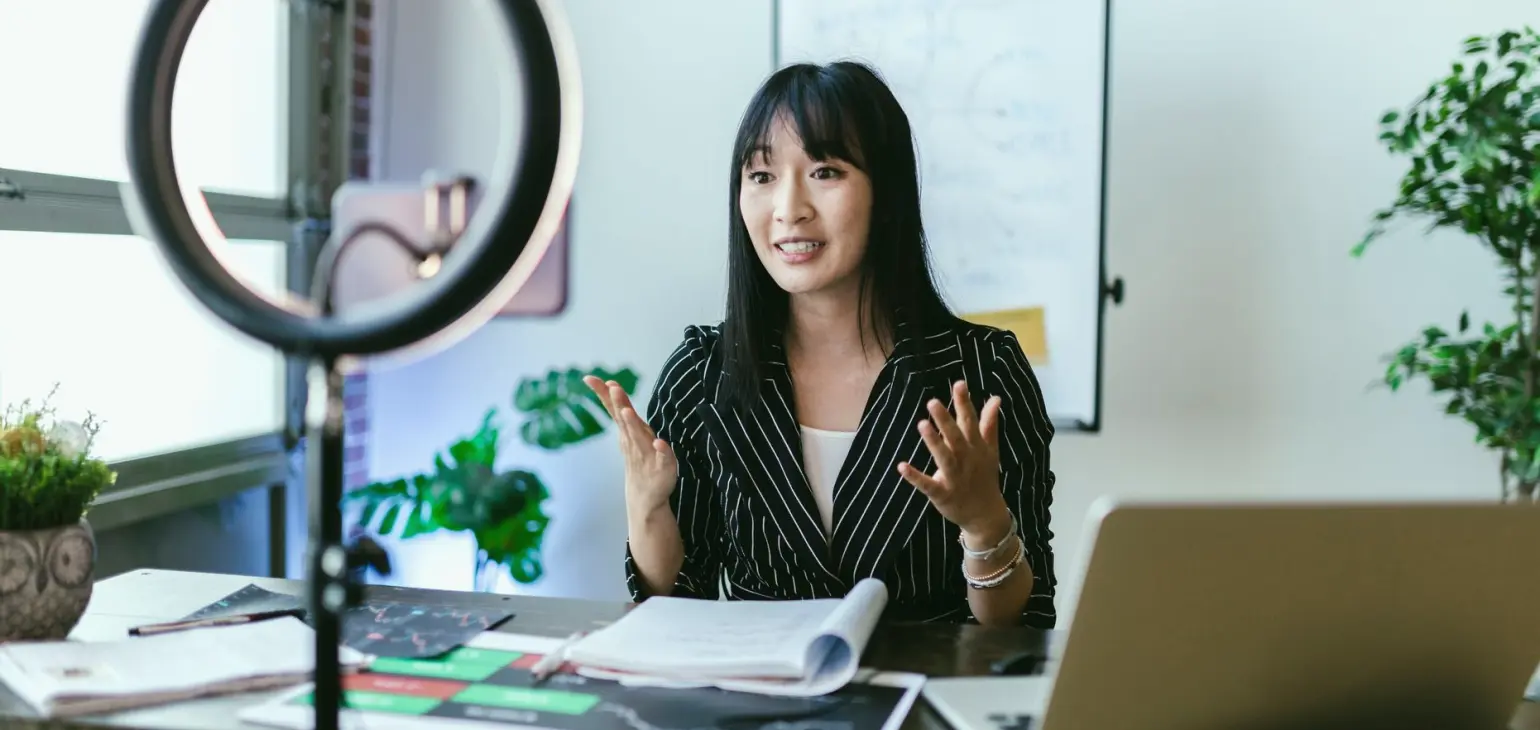
Before you decide the opening is final, look at what the viewer will see while hearing it. The first seconds on screen carry weight: framing, lighting and your position relative to the lens all shape the impression before you speak a word. Check that your face is clearly lit, that your eyes are near the top third of the frame, and that nothing in the background competes for attention.
For live streams, add a practical check. Confirm that your audio is clear, that you have a title or caption visible if your setup allows one, and that you know what you will do if early viewers arrive before you are ready. A live opening often needs a gentle holding line while people join, and it helps to decide that wording in advance.
Lastly, think about where your eyes go. If you read from notes or a teleprompter, the opening is where a downward glance or a stiff stare is most noticeable. Do one trial of just the first thirty seconds into the lens and watch it back with the sound off. If you look engaged without sound, the opening is likely to work with it.
- Face lit and eyes in the upper part of the frame
- Background free of distractions
- A planned line for early live arrivals
A last pass before you commit
Once you have worked through the questions, do a final pass with fresh eyes, ideally after a break. Read the opening aloud twice, then record one take purely for yourself. Watch it as a viewer would and ask whether you would keep watching. This single take often shows more than any amount of silent editing of the script.
If you are unsure between two versions, choose the one that sounds more like you in conversation. A slightly plainer opening delivered with ease usually does better than a polished one that makes you tense. You can always refine it after a few recordings, because openings improve with repetition more than with rewriting.
Keep your marked-up checklist with the script. Next time you record, you will see which questions caught you out before, and you can start from there instead of from nothing.
A good opening rarely comes from inspiration. It comes from answering a handful of plain questions: who is watching, what the greeting sounds like aloud, which single message matters, and how the setting looks and sounds. Go through them once, mark what is unclear, and rehearse those parts first. Then record a trial take and watch it. If it feels easy to say and clear to follow, you are ready to begin.